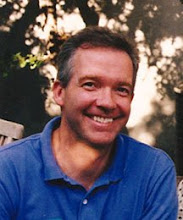
Chillaxin' at Everest Base Camp
Sometimes Google can be just a little too sophisticated. Otherwise I would have updated my blog ages ago. When I've tried to update my blog from here at Everest base camp, Google, the sponsor of this site, detects the location from which our satellite signal is originating and all of the menus show up in the script of a language with which I am utterly unfamiliar. So to make this work I've asked a friend to update my blog for me.
Our trek to Everest base camp was relatively uneventful, other than the typical health issues associated with hygiene, sanitation, and nutrition in the third world. Thank your lucky stars for flush toilets, hot showers, potable water, and food that you can trust. I used to be able to say that I was genuinely omnivorous in the sense that I could eat anything and that I was the least picky eater you were ever likely to encounter. Well, I've met my match: yak meat.
We took our time on the journey, trying to give our bodies time to acclimatize properly, spending a couple nights at the truly fabulous Sherpaland Hotel at Namche Bazaar, then on our trek making overnight stops in Tengboche, the site of the famous monastery, Dingboche, and finally Lobuche before we finally arrive at Everest base camp. Some of the guides and Sherpa associated with our 7summits-club expedition had preceded us to base camp and our camp was already set up by the time we got there. We stole the prime spot on the uppermost end of Everest base camp usually occupied by the Alpine Ascents International expedition, but in the interests of U.S.-Russia relations the AAI guys were very gracious about it. Along the way we met Todd Burleson, the founder of AAI, and Vern Tejas, one of their famous guides. Both of them were very classy guys.
Having never been to Everest base camp before, I really didn't know what to expect. Nor did I realize what a prime spot we had. There's a saying to the effect that !@#$ rolls downhill, and so it is at Everest base camp. There we are at the top, untouched by any filth from higher up, but I can't say the same for those down below. Everyone makes do as well as possible, but it can be pretty grim for people trying to climb Everest on the cheap. I really lucked out with Alex Abramov, the Russian leader of our 7summits-club expedition. The quality of our food and other amenities at base camp are far and away superior to what others have to endure. Proper nutrition is vitally important here, because the altitude really saps your strength and kills your appetite. You have to eat; otherwise you won't have the energy reserves to climb the mountain. The food isn't what I would necessarily choose, but there's variety and it's prepared in such a way that we're unlikely to get sick from eating it.
The topography of Everest base camp was a bit of a surprise to me. There's no flat camping area. The whole thing is built on top of a slowly moving glacier covered with rocks and gravel. It is melting out from under me as I write this. The terrain can best be described as undulating. To get anywhere, even in your own camp, you have to scramble up and down hills covered with loose, unconsolidated, sharp rocks and scree, with patches of ice showing through from underneath. It's a wild and crazy place to pitch a tent.
The bottom of the infamously dangerous Khumbu ice fall is quite close to our camp, so when I wake up in the morning and open the zipper of my tent I enjoy a spectacular view of the Khumbu ice fall. It's really quite breathtaking, and quite dangerous to move through. We've already been up through the fall twice for acclimatization purposes. The first time we just spent a night at Camp I and returned to base camp the next morning. The second time we spent a night at Camp I and then moved further up the mountain through a valley of glacial snow and ice known as the Western Cym (pronounced "coom") to Camp II, which is situated at the base of the steep Lhotse face. The next morning we retreated all the way back to base camp.
What makes the Khumbu ice fall dangerous? It's a huge jumbled of constantly moving blocks of glacial snow and ice known as seracs. Some of them are the size of buildings, and they can fall on you without warning. Then there are the deep crevasses, most of them bridged by aluminum ladders put in place by a specialized team of Sherpa known as the "Ice Doctors" who are responsible for maintaining the route through the Khumbu ice fall. They stay very busy as the fall is constantly shifting. It is particularly dangerous to be in the fall in the afternoon when the sun is beating down and melting out key structural supports for the larger seracs, so most people try to climb through the fall in the very early morning, but you never know. Things can get crazy at any time. We were barely missed by an avalanche on our second trip through the fall. All you can do is clip in to the nearest, strongest anchor, hide behind the biggest serac in the area, and hope for the best. It was especially unnerving, because we could hear the avalanche before we could see it.
It is Monday here. Early Wednesday morning I'll be joining Team I for our third acclimatization climb up the mountain. We'll spend one night each at Camps I and II, both of which we've been to before, and then push higher up the mountain halfway up the steep Lhotse face to Camp III, which is situated at about 23,000 feet. We'll spend a night there and then the next morning we'll attempt to climb without supplemental oxygen another thousand feet or so to the top of the Yellow Band. Then we'll scurry all the way back down to Camp II, spend the night, and then retreat all the way to base camp the next morning. Following that we'll take about a week to rest and recover, perhaps retreating further down the Khumbu valley to lower altitudes, and then regather at base camp for our summit push.
This has been so much harder than I ever could have imagined. It is taking absolutely everything I've got--physically, mentally, emotionally, spiritually, psychologically--just to cope with the challenges I'm facing. It will be nothing short of a miracle if I actually summit. So many things can and do go wrong, but then miracles do happen, and with the kind thoughts and prayers of so many friends I'm curiously optimistic. Thank you for all of your support. I can sense it.
It is said in some ancient spiritual traditions that the one and only voice of God is silence. That voice is very loud here. It's so deep and profound here you can't help but hear it.
Monday, April 27, 2009

Monday, April 6, 2009
Plan B: Flying by helicopter to Namche Bazaar

Well, so much for Plan A. We didn't make it out today either on account of bad weather in Lukla. The airport here in Kathmandu has become a purgatory of sorts for lost souls hoping for redemption in the form of a flight to Lukla. It's not just the Everest climbing expeditions. There are a bunch of trekkers too who hope to make their way to Everest base camp.
I'm impressed with the patience exhibited by my fellow expedition members and especially by our expedition leader Alex Abramov. No one seems upset, even though objectively it's frustrating to be stuck in Kathmandu waiting for a break in the weather. It's nice to be surrounded by people who understand that no amount of worrying about what can't be helped is going to make the situation better, so we're making the best of it.
Now our plan is to fly to Namche Bazaar tomorrow morning in a huge Russian-made heavy-lift transport helicopter that can carry all 11 of us and all of our gear in one trip. I like that plan mostly because it gets us out of Kathmandu and on our way to Everest base camp, and the added bonus, assuming the weather is clear enough for us to land at Namche Bazaar, is that Namche Bazaar is closer to Everest base camp than Lukla, so this will enable us to skip the trek from Lukla to Namche Bazaar, which was on our route anyway. The downside is that Namche Bazaar is considerably higher than Lukla. I believe I've heard the elevation of Namche Bazaar is 3,400 meters, which would be just a little over 11,000 feet. Kathmandu is a little shy of 4,500 feet, so we're looking at an elevation gain of 6,500 feet in a matter of 30 minutes or however long it will take us to fly to Namche Bazaar. That's a lot of altitude to digest in terms of acclimatization, so it's likely that we'll stay put in Namche Bazaar for a least a day.
After spending the bulk of the day at the airport, I succumbed to the temptation to check out the extraordinary number of climbing gear shops in Kathmandu. Most of these are very small mom & pop stores with a somewhat limited inventory, so it's not like you've got a bunch of REI stores to choose from, but if you know what you're looking for and are willing to keep searching, there are great bargains to be had. I've really got everything I need, but what caught my eye this afternoon was an ultra-light weight headlamp from Black Diamond: the Ion. My trusty older headlamp, state-of-the-art as of four years ago, feels like a brick compared to the Ion. I got a great price on it too and picked up some spare batteries while I was at it. I'll test it once we're at Everest base camp and decide whether to take it alone or as a backup for my older headlamp. The loss or malfunction of a headlamp on summit day would make it impossible to proceed. A typical push to the summit from the South Col/Camp IV begins before midnight. You've got to be able to climb in the dark for at least six hours or so.
Our acclimatization plan is to make a total of four trips up the mountain from Everest base camp. The first time we will climb through the treacherous Khumbu ice fall to Camp I at approximately 6,000 meters/19,700 feet, spend the night there, and return to base camp the next day. The second time we will climb to Camp I, spend the night there, advance the next day through the Western Cwm to Camp II at approximately 6,200 meters/20,300 feet, spend the night there, and then descend the next day all the way back to base camp. The third time up the mountain, perhaps the most critical in terms of acclimatization, we will bypass Camp I, ascend directly to Camp II, spend the night, climb half-way up the Lhotse face to Camp III at approximately 7,200 meters/23,600 feet, spend the night, and then push on to the Geneva Spur, which is not far from Camp IV on the South Col at 8,000 meters/26,200 feet. (The objective is to reach the Geneva Spur without the use of supplemental oxygen. If we can reach 26,000 feet without supplemental oxygen, weather permitting we should be able to reach the summit at 29,035 feet with supplemental oxygen.) After reaching the Geneva Spur we will descend all the way back down the mountain to base camp and then continue descending for rest and recuperation at the much lower altitude of Tenboche. We'll stay there for a week, ascend back up to base camp, and then wait for a good weather forecast. When we can reasonably anticipate a 72 hour window of decent climbing weather, we'll move up the mountain in stages, taking a day to climb from base camp to Camp II and another day to move from Camp II to Camp III. We'll start using supplemental oxygen at Camp III. The next morning we'll climb to Camp IV on the South Col and prepare to leave Camp IV for the summit that same night a little before midnight. That's the theory anyway. The weather may have other ideas.
Friday, April 3, 2009
Flying to Lukla
If all goes well we'll be on a plane tomorrow morning to Lukla to begin our trek to Everest base camp. I say "if all goes well" because the huge Alpine Ascents International expedition, several members of which I know from my Aconcagua expedition several years ago, have been stranded for several days now. That's one of the disadvantages of a large expedition: logistically it's more of a challenge to move people and gear, especially when airplanes are involved. Even though there's a thunderstorm going on here in Kathmandu right now, the forecast for tomorrow is good, so I'm optimistic that we'll be able to fly.
Although it's possible to make the trek from Lukla to Everest base camp in a matter of three or four days, we plan to take 8-9 for purposes of acclimatization. That's a process that simply can't be hurried, at least not safely. Along the way we'll spend time at Namche Bazaar and Tenboche monastery. (I'm guessing about the spelling of those by the way, so cut me some slack. I'm sure I'll have it right once I've spent some time in each place.)
We've already got a couple of the Russian guides and some of our sherpas at Everest base camp. Our camp should be well established by the time we get there.
I won't have access to the Internet while we're trekking to base camp, so this will be my last post for 8-9 days. I'll be back online once we get to base camp. Hopefully, our satellite uplink and wifi system will be operational by the time we arrive.
I'm getting to know the other members of the expedition better and better. It's a very diverse, international group, with climbers from Russia, France, Holland, Northern Ireland, the Isle of Man, Canada, and then there's me from America.
I'm amazed at the technology that is available these days. Earlier I was on a video call via Skype with a producer at Inside Edition. Nothing is for sure until a segment actually appears on the broadcast--that's just the way that industry works--but it's all looking very positive in terms of doing some segments about my Everest expedition and the Arizona Dream House Raffle. Who knows? Soon I could be talking to Deborah Norville via Skype from Everest base camp with the spectacular Khumbu ice fall in the background.
Thanks as always for your support and keeping me in your thoughts and prayers.
Thursday, April 2, 2009
Kathmandu
I'm sitting in the lobby of the Hotel Yak & Yeti in Kathmandu, Nepal. We'll have another day or so here before we fly to Lukla to begin our trek to Everest base camp on Saturday. I spent the day walking around Kathmandu doing some last-minute shopping for some essential climbing gear. This is probably the best place in the world to pick up equipment for high-altitude mountaineering. There are something like 200 climbing gear shops in the city. Kathmandu has changed quite a bit since I was last here in 1994. Most of the roads are paved now, and the power supply is more consistent, although there are still periodic outages. Tourism is down almost 20% due to the recession, so people who depend on tourism for their livelihoods are a little aggressive. Who can blame them? You do what you have to do to survive. Still, compared with 15 years ago, the standard of living seems to have improved quite a bit, although there is still abject poverty everywhere you turn.
I'm getting to know some of the other members of my expedition. They are an interesting group of people. There's John, 55, from the Isle of Man, a motorcycle racer who's had his share of near-fatal accidents. This is his third attempt to climb Everest. Then there's a married couple, a rare entity on expeditions like this, Nowell and Lynn, both endurance racing enthusiasts who regularly run eco-challenge races and ultra marathons. They attempted Everest together in 2005, but Nowell experienced retinal bleeding in both eyes, compelling him to abandon the attempt. Nowell and Lynn had made a pact, that if one of them could not continue, the other would go on, but Lynn could not bear to leave Nowell in that condition, so she abandoned her own summit attempt. Nowell came back the next year and successfully reached the summit of Everest. This year the two of them are back to reach the summit together. Another member of the team is Philippe, an IBM executive from France. Today a friend of Nowell and Lynn's arrived, Patrick from Canada. Then of course there are the Russians, starting with our expedition leader Alex Abramov. More on them later.
Arizona is almost exactly on the other side of the planet from Kathmandu, so I've got 12 time zones of jet lag with which to contend. I hardly slept at all last night. Hopefully, I'll fare better tonight.
I'm anxious to begin our trek to Everest base camp. Soon enough.
Tuesday, March 31, 2009
Are you kidding me?
I'm in Singapore, 3:30 a.m. local time, waiting for my flight to Kathmandu in the morning. I was featured on ABC15 news at 10:00 o'clock the night before my departure. Some enterprising burglars put two and two together, realized I would be gone for a couple of months, and decided to break into my Biltmore home, the one I'm raffling off for charity. (See www.ArizonaDreamHouseRaffle.com for details.) My neighbor stopped another crew that was trying to steal my Rolls Royce! I know times are tough, but just how low can you go? I mean, seriously, are you kidding me? Who would break into a house that is being used to raise desperately needed funds for the Child Crisis Center, a charity that helps prevent child abuse and neglect? I guess no good deed goes unpunished. I'm surprisingly calm and unruffled about the whole thing, but I really didn't need the distraction as I prepare to climb the highest mountain in the world. I wish the burglars well, and I hope their circumstances improve during these hard times to the point where they no longer target people who are trying to do a little good in the world.
Sunday, March 29, 2009
I'm leavin' on a jet plane ...

T-minus 10 hours and counting before I begin my journey to Kathmandu, Nepal. The first leg is an early morning United Airlines flight from Phoenix to San Francisco. From San Francisco to Kathmandu I'll be flying Singapore Airlines all the way with a fuel stop in Tokyo, a long layover in Singapore, a change of planes, and a direct flight from Singapore to Kathmandu. I'll arrive in Kathmandu around noon on Wednesday. The last time I was in Kathmandu was 1994, so it will be interesting for me to see what's changed over the years. I look forward to meetin the other members of the expedition in person. We'll be staying at the Yak & Yeti Hotel for several days before flying to Lukla to begin a 9-10 day trek to Everest base camp.
I'm feeling a whole rainbow of colorful emotions right now. I'm worried, concerned, even a little fearful of the daunting challenges that lie ahead. The area above Camp IV, from 26,000 feet to the summit of Everest at 29,035 feet, is known as the "Death Zone" for good reasons. So many people have perished attempting to climb Everest. Yet I'm also feeling a profound sense of quiet confidence and certainty that this is what I'm supposed to be doing right now. I honestly don't think I could have trained harder or smarter, especially sleeping in my altitude tent for purposes of acclimatization. I've had the hypoxic generator set at 20,000 feet for weeks now. I'll soon see how well my training prepared me for the climb, especially the first time I make the arduous ascent through the infamous Khumbu ice fall. I don't think there has ever been a climber gasping for breath on the summit ridge of Everest who thought to him- or herself, "You know, I wish I hadn't pushed myself so hard with all of the training. This is a walk in the park." I'll soon be grateful for all of the effort.
Our expedition leader, Alex Abramov, informs me that we'll have a satellite uplink to the Internet and our own wi-fi network at Everest base camp. I'm taking a pair of laptops, a Macbook Pro and a Macbook Air, to stay in touch while I'm climbing Everest. That means I'll be able to update this blog regularly once we get established at base camp. I've also just figured out how to use Skype to make video calls over the Internet, so with all of this technology I'm going to have a very different experience on Everest compared with what things were like on the other big mountains I've climbed. I had some porter help on Kilimanjaro, but everywhere else I had to carry everything I needed myself. On Everest most of the heavy load carrying is done by Sherpa, so you're not going to catch me boasting that I climbed Everest by myself. No way. I will give credit where credit is due. My chances of successfully summiting Everest are so much better precisely because of all of the help I anticipate from Sherpa.
I'm so very thankful for all of the help and support I've received from friends and family far and wide. I absolutely thrive on the positive energy, prayers, and best wishes so many people so generously send my way. I couldn't do this without you. Thank you from the bottom of my heart.
Monday, March 9, 2009
Did I say Tibet? Oops! I meant Nepal.

The Chinese have done it again. They've effectively closed Everest from the Tibet side for the second year in a row. At least this time we had a little more advance warning, enough time to switch to the Nepal side. I guess I'm not surprised. This year marks the 50th anniversary of the Dalai Lama's exile, so the last thing the Chinese want when Free Tibet protests inevitably erupt this spring is a bunch of western mountaineers sympathetic to the Free Tibet cause hanging around Tibet with their digital still and video cameras, satellite uplinks, and access to the internet. It's harder to shoot teenage nuns in the back and leave them for dead in the snow when a video of the atrocity is going to show up on YouTube right away. The Chinese closed Tibet to tourists for the entire month of March. That prevents Nepalese sherpas from entering Tibet in time to prepare base camp and start moving tons of supplies up the mountain. Logistically, April is too late to start the process and hope to have everything in place in time for an Everest summit bid when the weather opens up toward the end of May. There was no guarantee the Chinese would open up Tibet to tourists in April anyway, so it was not a tough decision for Everest expedition organizers to switch to Nepal. That comes with a big price tag, however, both in terms of money and the potential for bottlenecks through the Khumbu ice fall and the Hillary Step. I've had to cough up an extra $14,000 to make the switch, and with the Nepal side of the mountain filled with climbers who were otherwise going to make the climb from the Tibet side, there's bound to be some traffic jams at key points along the route. I'm disappointed, naturally, because I was really looking forward to seeing Tibet, and although climbing Everest from the Tibet side was going to be more of a technical challenge higher on the mountain, I was happy about the fact that there is no equivalent to the treacherous Khumbu ice fall on the north side of the mountain. Now, having switched to the Nepal side, I can look forward to ice climbing and crossing deep crevasses walking on crampons across aluminum ladders lashed together to bridge some of the wider chasms.

On a much more positive note, I took some time off from training this past Friday to speak about my upcoming Everest expedition and my quest to reach the highest point on each continent at Laird Elementary School in Tempe. The kids were very attentive, seemed to love the pictures, and asked lots of interesting questions. There was a palpable sense of positive energy at the school, a can-do sense of hope and optimism, a sense of meaning and purpose. Kudos to the faculty, staff, parents, and students. It was an honor and a privilege to speak. The whole experience made me think of my own third grade teacher, Mrs. Fry, who spoke these words to me, words I'll never forget: "Michael, there is nothing in this world you can't accomplish if you set your mind to it." I believed her, and that has made all the difference.
Subscribe to:
Posts (Atom)